Category Archives: Mentoring Students

It’s STEAM Not STEM!

A few weekends ago, I went with my wife to a conference sponsored by Americans for the Arts in Sundance Utah.  My main reason for being there was to accompany her and enjoy the resort.  I learned some things there too.  In talking with other arts administrators from around the country, I realized how important knowledge and appreciation for the arts is for all students regardless of their major. Something I experienced when I was in college.

As an undergraduate engineering student, I had to have 223 quarter hours to complete my degree.  Only three of these were for a free elective.  I took the easiest sounding course I could find – music appreciation.  It wasn’t what it sounded like at all!  Our teacher started with the Gregorian Chants from 900 AD and went right up to the present day popular music at that time including the classics.  She really challenged us.   I took the time to study and learn to appreciate all the music we listened to.  In addition to passing the course, I developed an appreciation for classical music I still have today.  We are subscribers to the Baltimore Symphony and go at least three or four times a season.  I have thanked my teacher many times for helping me learn and appreciate the arts.  Science, technology, engineering and mathematics (STEM) are all very important areas of study but no student’s education is complete without developing an appreciation for the arts.  It’s STEAM not STEM.  The arts are important too.

Racism and White Privilege In America

Three Keys by mmarchin via flickr

The current racially charged environment in America and the 400th anniversary of slavery have resulted in two articles I want to highlight in this post. The first is The 1619 Project in the New York Times. It’s a series of essays that comprehensively address slavery, which began in 1619, and the consequences of racial oppression and exploitation throughout history up to today. The essays clearly show that slavery isn’t something that happened in the past and is over now. They insightfully chronical the political, social and economic costs of slavery to African Americans and the society as a whole today. The 1619 Project is a must read for everyone interested in knowing the truth about slavery’s past, present and future in America even if these truths are uncomfortable.

One consequence of racial oppression in America is the strongly held notion of White Privilege. In All College Students Should Take a Mandatory Course on Black History and White Privilege, Emily Walton discusses the course she teaches on this topic. She writes that “…. race still exerts a powerful influence on life chances, working through institutions like higher education, the criminal justice system and the labor market. ” The result has been “white blindness”, i.e., the inability of some persons in America to even see the pervasive presence and influence of White Privilege. One of her challenges is getting a diverse group of students to take the class. Most of them are black which may show, in another way, how important addressing this issue is. According to Ms. Walton ” By the end of the term, students have a deep understanding of these complex social problems, and realistic ideas for how to make change through our relationships and institutions. “

I strongly recommend reading these articles and discussing them with a diverse group of people. That’s the only way we can begin to move forward from where we are today.

Is Passing The Course Enough?

© Stephen Coles on flickr

Having been in higher education for almost forty years, I have heard many reasons for students to go to college – some good and some not so good.  The focus is pretty much on getting a good paying job after graduation.  To do that, students take and pass courses until they’ve completed their requirements for graduation, so this is the focus – not learning anything or being able to use what was learned in the real world or even how to use it.

As an educator, I think we must shoulder some of the blame for this.  Too often, we present information to the students without really helping them understand why it’s important other than that it may be on the next test.  Because of this, the students retain information well enough to repeat it on the test and then forget it never really understanding its value.

This is not what we should do and this is not how learning takes place.  I tell my students that they are smart enough to learn the material, my job is to put it into context for them so they know how it fits with what else they should have learned and how to use the information after they graduate.  Put another way, I want them to be able to recognize an application of knowledge they obtained and know how to use that knowledge to solve real world problems and answer real world questions.  In the long run, this is what makes them valuable to an employer and to society in general – not what grades they got in college.  A few years after graduation, no one will ask them about their college experience any more.  They will want to know what they’ve done with what they learned since graduation.  Graduating may get them employed but what they learned while they were in school and how well they can use it will keep them employed.

Is Artificial Intelligence Going To Change Education?

I’m reading a book on artificial intelligence (AI) that has made me think about how it will impact the future of education at all levels from k-12 to college.  What AI is doing is creating “thinking machines”.  That is, computers that are capable of original thought, not just executing instructions that they have been given.  Now I don’t want you to think I’m talking about Terminator type evil robots because I’m not.

I’m talking about a tremendously valuable resource for teachers and students.  It’s obvious that one teacher can’t custom tailor his/her teaching style for each student in every class even if they knew what worked best for each student.  To assist teachers, we have developed computer aided instruction which will quiz students and change questions asked based on what they get correct and what they get wrong but these systems can’t learn why students perform the way they do.  This is the wonderful potential of AI in education.  Thinking learning machines may be able to understand why students learn as they do and custom tailor a curriculum just for them that is dynamic so it can change with the student’s preferred learning style day to day even hour to hour even if the student or teacher can’t clearly state what that learning style is.  This will give educators a capability we have only dreamed about having.  It will also give students learning opportunities they have never had before.

This truly is disruptive technology which can make people uncomfortable.  Let’s push through the discomfort and realize the potential AI can have to radically improve education for all students everywhere.

More Challenges For Minority Students in Higher Education

Picture this in your mind.  World class athletes line up for a 100-yard dash.  All of them are white except one who is Black.  When the gun sounds the white athletes bolt from their starting blocks and run as fast as they can.  The black runner, however, is held back until the other runners have gone 50 yards.  Then he is allowed to run and told “you’re equal now”.  When he asks about the 50-yard head start everyone else got, he’s told to make that up “on your own”.  That’s where we are in America since affirmative action programs have be eliminated in colleges and universities.  Although past racial injustices have not been addressed, blacks and other persons of color have been told to make up the huge gaps that remain “on their own”.  In a recent article from the New York times, Vivian Yee discusses what this “on your own” attitude can produce.  Its’s call the “ideal system” where every student will be evaluated with the same standards based on “merit” alone.  The level of preparation and/or ability resulting from minority students’ k-12 educations will not be considered in any way nor will there be any specific efforts to diversify enrollment.  This may be a reason why  the number of and percentage of minority students in higher education reached a plateau or began to decline in 2011.

Some schools, like Columbia however, have very intentionally worked hard at diversity and have increase minority enrollment and graduation in recent years.  Harvard, in fact, has the most diverse class in 380 years for this fall .  It has been shown that diversity improves educational outcomes at all levels.  I suggest that all parents and students making a college choice look more closely at diversity as a factor and let decision makers in higher education know diversity is important to you by choosing colleges that think it’s important too.

A Great Way To Save For College Few Families Use

Copyright State Farm

Paying for college is a real challenge.  Tuition, room, board, books and other expenses can easily exceed $30,000 a year.  There is a way to save for these expenses that is effective and flexible.  In spite of this, few families take advantage of it.  In a recent article from Business Insider I read that only about 13% of families surveyed reported using a 529 plan to cover college expenses – down from 16% the prior year.  The plan allows parents or anyone else to open a 529 account and contribute through direct contributions, payroll deductions or automatic transfers – before a child is even born.  The money grows tax free and can be withdrawn tax free at any point as long as it’s used to cover college tuition, fees, books and supplies.

Each state runs their own plans so check with your state department of higher education for relevant details.  You can read about 111 options for investing funds in 529 plans at savingforcollege.com.  Starting a 529 plan early can help make paying for college easier and reduce the need for student/parent school loans.

Is An Ivy League Education Really Worth It?

9599974289_0ca9dd026c_z
From the U. S. Department of Education on Flikr

Should you send your son or daughter to an Ivy League college or university or another high quality school that does not have the prestige or the cost of the Ivies?  This is a question parents all over the country wrestle with every year as decisions about where students will be in the fall are made.  The choice of a college or university depends on many things the most important of which is the student.  Each family should send their son or daughter to the school the fits him or her best and that fits their budget for college.  In Ivy League or Bust? , Kristin Battista-Frazee’s recent article on Huffington Post does an excellent job of setting out the factors to be evaluated when making this important decision.  I strongly recommend that you read this article before deciding on a college or university.


Yes, It Can Be Done

bs-md-ci-leadership-school-graduation-20160525-001
Baltimore Sun 6/12/2016

I recently read one of several troubling articles on the resegregation of public schools in America.  We seem to be headed back to separate but unequal all over again.  My question is does it have to be this way?  Are there examples of public schools that are doing an effective job of educating disadvantaged youth in the communities where they live?  The answer is yes.  This spring, The Baltimore Leadership School for Young Women (BYSYW – pronounced “Bliss”) graduated its first class of 60 young women who are all going to colleges such as Johns Hopkins with SAT scores significantly higher than the city public school average and over $487,000 in scholarships.

The school’s director of college advising stated that “In a perfect world, everybody would go to college.  In the BLSYW world, everybody creates a success plan.”  School administrators said that message is the legacy of the first graduating class.  Take a look at the article from the Baltimore Sun and let me know if you agree that this model needs to be expanded and emulated.

How To Reduce College Dropouts

Dropout PictureFollow the link below to read an interesting article on what some universities are doing to significantly reduce the number of students who start but don’t finish college.  How do you think these strategies would work at your college or university?
http://www.nytimes.com/2016/05/01/opinion/sunday/what-can-stop-kids-from-dropping-out.html?_r=0

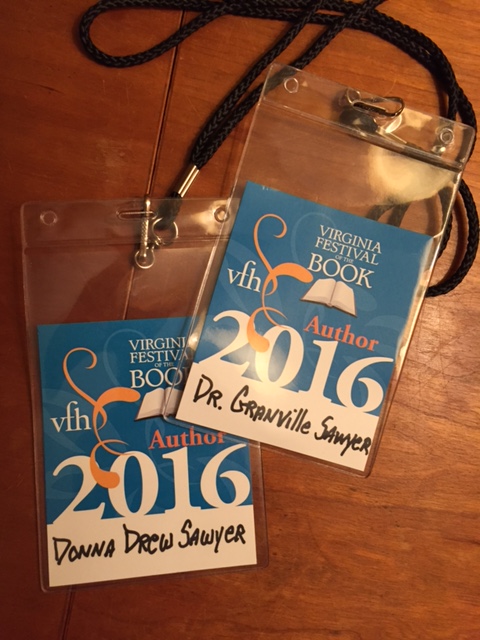
The Virginia Festival of the Book – A Wonderful Experience

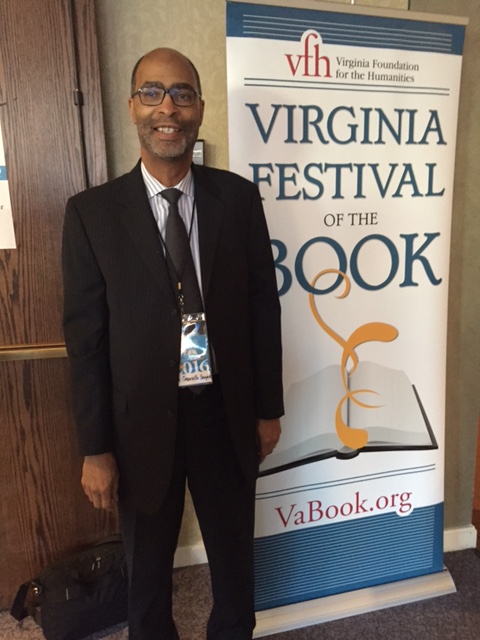
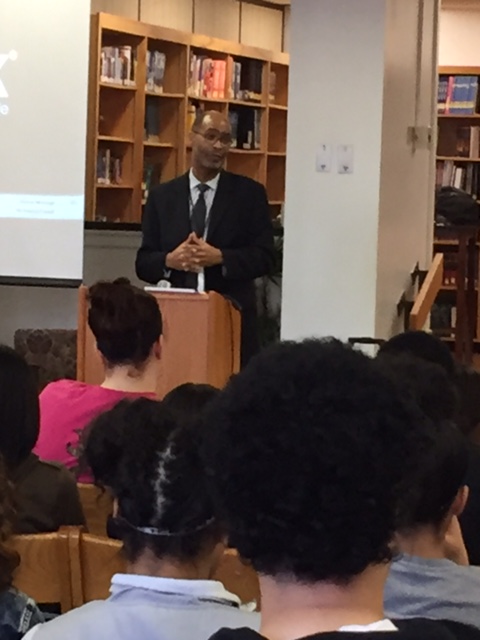
In March, Donna and I were presenting authors at the Virginia Festival of the Book.  I participated in three events.  On Wednesday March 16th, I talked with fifty students at Albemarle High School about preparing for success in college.  Several of the students told me how much they appreciated the advice and how I shared it with them and the teachers were glad to hear their messages reinforced by someone the students enjoyed listening to.

Wednesday evening, I was one of two panelists discussing the adolescent mindset and the best ways to help students prepare for and have a successful college experience leading to graduation in four years with good grades and good job prospects.  There was a standing room only audience who had sons and daughters in college or preparing to go so they were quite interested in our presentations.  They demonstrated their interest by purchasing all the books I had brought for sale!

Finally, Sunday morning I briefly discussed College In Four Years at the Links of Charlottesville brunch for Festival authors who wrote books relevant to African Americans and/or people of color.  I told the audience of 200 about the value of the book for students and parents and how it could be instrumental in helping them work together for success in college.  The message resonated with them and they also purchased every book available for sale.

In addition to these presentations, I will be sharing more information with students in Charlottesville high schools in May.

Needless to say, I am thankful for the opportunity to participate in the Virginia Festival of the Book and thrilled with the reception College In Four Years got at all the events and with an opportunity to share information with more students in May.  Take a look at the pictures below from the events.

IMG_0755 (1)
The beginning of a great event!

IMG_0756
My talk with students at Albemarle High School.

IMG_0760
The Sawyer Authors!

FullSizeRender (1)
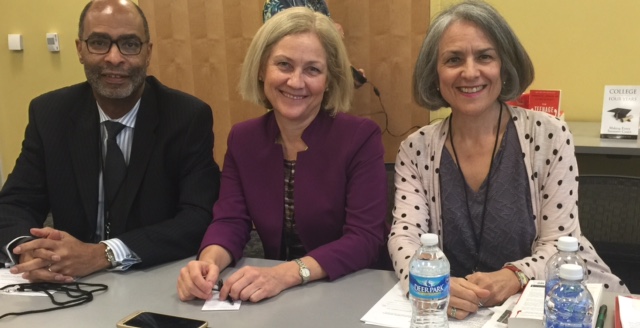
My panel discussion on the teenage mindset and higher education with Dr. Florence Jensen (The teenage Brain: Planning for Success in High School, College, and Beyond) and our moderator Ms. Elizabeth Benedict.